




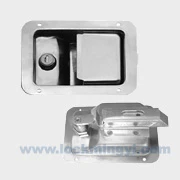
Rod Control Lock
Rod Control Locks for Multi-Point Cabinet Closure
Mingyi rod control locks use one handle or gearbox to move vertical rods and secure two or more points on an enclosure door. They are designed for electrical cabinets, communication enclosures, industrial equipment and other tall or wide access doors—not for controlling loose rods or nuclear reactor systems. Explore complete rod-control mechanisms, separate handles for rod latches and recessed swing-handle assemblies. For accurate model selection, compare the door height, cutout, panel thickness, rod layout, operating direction, latch-point position and required access method.


How a Rod Control Lock Works
A rod control lock converts the rotation of a handle into coordinated rod movement. The rods engage keepers near the top and bottom of the enclosure, so one operation can secure multiple areas of a tall door. The complete closure must be selected as a system: handle, drive mechanism, rods, guides, end hardware and door geometry must work together.
Rod Control System
Gearboxes, central mechanisms and rod-control components for building a coordinated multi-point closure around the selected door layout.
View systems →Handle for Rod Latch
L-, T- and lever-style operators that rotate the rod mechanism. Suitable when the customer has defined the linkage and needs a compatible operating handle.
View handles →Swing Handle Rod Latch
Recessed swing handles for compact cabinet access and multi-point operation. Compare cutout, locking method, rotation and linkage compatibility.
View swing handles →System Components and Their Role
Rod Lock Selection Table
| Selection item | What to measure or define | Why it matters |
|---|---|---|
| Door construction | Height, width, panel thickness, frame profile and door opening direction | Determines linkage arrangement, travel and mounting space |
| Locking points | Two-point, three-point or other multi-point layout | Defines how the door is retained around its perimeter |
| Handle installation | Cutout, hole pattern, projection and clearance behind the panel | Prevents interference with internal cabinet components |
| Operating direction | Left/right application and required handle rotation | Ensures the rods move toward the correct engagement points |
| Access control | Keyed, padlockable, tool-operated or non-locking | Matches maintenance access and security requirements |
| Environment | Indoor/outdoor use, dust, moisture, chemicals and corrosion exposure | Guides material, finish and sealing discussions |
Typical Applications
- Electrical distribution and control cabinets
- Communication, network and server enclosures
- Industrial machinery and automation equipment
- Energy-storage and power equipment cabinets
- Vehicle bodies, service compartments and equipment housings
RFQ Information Checklist
- Dimensioned door and frame drawing
- Handle cutout and available mounting depth
- Door height, rod length and latch-point locations
- Left/right handing and opening rotation
- Access type, finish, quantity and destination
Recommended Project Workflow
- Define the door: provide the cabinet drawing, hinge side, frame section and internal clearance.
- Map the latch points: identify where the upper, lower and optional central engagement points must sit.
- Select the operator: choose a swing, L-, T- or lever handle and the required access-control method.
- Verify a sample: check rod alignment, handle travel, door closing force and keeper engagement on the real enclosure.
- Approve production details: confirm materials, finishes, component list, packaging and quantity.
We have produced locks and fittings since 1988, with processes covering R&D, mold making, die casting, plastic injection, stamping, inspection, assembly and packing. Related options include flush panel latches, handle locks and cylinder locks.
Send Your Cabinet Drawing for Model Matching
Tell us the door dimensions, cutout, rod arrangement, operating direction, access method, environment and order quantity. We can compare the available rod-control components with your installation requirements.
Request a Recommendation