


Butt Hinge
Established in 1988, Mingyi is a manufacturer of a wide range of metal products. We focus on producing locks and fittings for, industrial equipment, vehicles, and furniture industries. Mingyi Builds the whole production line from R&D, Mould-making, die-casting, plastic injection, stamping, inspection, assembly, packing and so on.
Rich Product Variety
Our company can produce cam locks, mailbox locks, flap handle locks, toolbox locks, folding T-locks, cabinet locks, quarter turn locks, hasp locks, garage locks, combination locks, special locks, cabinet hinges, hardware, etc.
Wide Range of Product Uses
Our locks and hardware products are widely used in communication cabinets, power industry, machinery and tools, transportation vehicles, garage doors, office furniture, etc.
Advanced Production Equipment
Our company has a complete production line from R&D, mold making, die casting, injection molding, stamping, testing, assembly, packaging, etc. And we control every link and process, and the company fully implements the ISO9001 quality management system.
Leading Service
We have many years of industry experience and a complete production management, quality supervision and sales service operation system. Whether you want to buy a mailbox lock or a toolbox lock, just send your needs by email and we can customize the product for you.


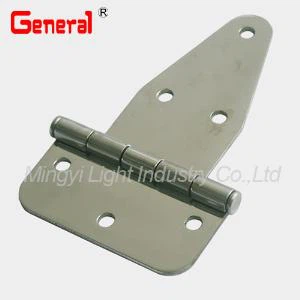


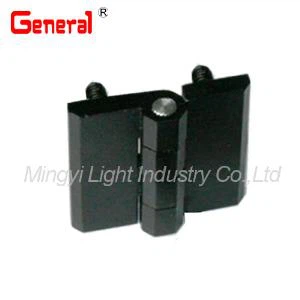
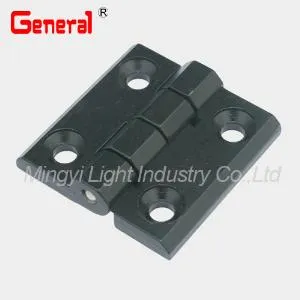


Butt hinges are the most commonly used hinge as door hinges. The door hinge comes in different types and various finishes, but they can typically be defined as hinges made up of two matching leaves connected by a joint of some kind.
Features of Butt Hinge
Increased Clearance
The primary advantage of Butt Hinge is the ability to raise a door, providing increased clearance for obstacles such as carpets, rugs, or uneven floors.
Easy Door Removal
Butt Hinge is designed to be easily lifted off their pivot pins, allowing for quick door removal and convenient access for maintenance or renovations.
Versatility
These hinges can be used on a wide range of doors, including wooden, metal, and UPVC doors, making them a versatile choice for various applications.
Aesthetic Appeal
Butt Hinge offer a unique look, adding a touch of elegance and sophistication to any door they are installed on.
Parts of Butt Hinge
Leaf
The leaf consists of a hinge's flat portion that extends from the knuckle or barrel and is attached to surfaces, usually by the means of screwing or gluing.
Leaf Width
Leaf width is the length measured across the knuckle from the pin's center to the leaf's outer edge.
Leaf Length
This is also known as leaf height and is measured perpendicularly to the pin.
Leaf Thickness
This is often referred to as the gauge.
Knuckle or Barrel
The knuckle (barrel) is the rolling, round portion of the hinge that houses the pin to hold the hinge. It is also known as the bearing. Although butt hinges with pins are frequently utilized, they are not the only element.
Pitch
Pitch is the distance between one knuckle's side to the identical edge of the knuckle next to it. This value reflects the strength of the hinge about normal wear and stress.
Paint Clearance
This is region that lies between a leaf and a knuckle. The paint clearance on your hinges allows the hinge to open and close when painting without scraping paint off the knuckle.
Countersunk Holes
These are the holes where the screws will be placed to fasten the leaf to the surfaces.
Pin
This is the rod-like part that is placed through the knuckle in order to hold the two leaves together.
End Play
The amount of axial movement between the leaves is known as end play.
Types of Butt Hinge


Plain Butt Hinges
The most common butt hinges are plain bearing hinges; builders typically utilize plain butt hinges for internal and lightweight doors. At the hinge's knuckles, a pin joins the two plates (or leaves). There's a chance the pin can be removed or not. Plain bearing hinges should only be used sparingly. They are a straightforward butt hinge with metal-on-metal contact but lack any additional components in the knuckle to aid in the reduction of friction, such as a ball bearing or washer. The hinge flaps or leaves are attached together by the interlocking knuckle parts, which then wrap around the pin.
Ball Tip Butt Hinges
A ball tip butt hinge features an additional decorative element at the top and bottom of the barrel and performs the same function as a regular butt hinge. It's an excellent choice if one desires more visual detail.
Ball-Bearing Butt Hinges
Heavy doors with high usage requirements, and doors with door closers, are excellent candidates for ball-bearing butt hinges. Lubricated hinges are present between the hinges' knuckles on ball-bearing hinges. This helps to lessen the friction that heavier doors frequently produce. These hinges are best used on big entryway doors and doors that get a lot of wear because they are made with durability in mind.
Rising Butt Hinges
Rising butt hinges are a solution in situations where it may be desired to have a door rise while being opened. For example, they are ideal for doorways with thick floor coverings that make it difficult for the door to open and close smoothly. As the door opens, rising butt hinges elevate the door a little over the carpet and, then, lower the door when shut so there is no gap at the bottom. Additionally, they make it simple to remove the door from the hinges, when necessary, which is useful for cabinet doors in garages and workshops where one needs to store and access larger goods.
Spring Butt Hinges
Spring butt hinges can also be referred to as self-closing hinges. A spring mechanism is attached to spring hinges, often known as spring-loaded hinges or self-closing hinges. Doors can now automatically close after being opened thanks to these marvels. They may be adjusted and have a variety of leaf thicknesses. They are typically used for screen doors and these hinges can be adjusted to open and close with various levels of stress.
Electric Butt Hinges
Electric butt hinges allow a low-voltage current to flow from the door-frame leaf to the door-side leaf of a normal hinge. They are exactly what they sound like: electrified butt hinges. This option is used when electric features like electric locks, alarms, and access-control devices are present. Electric butt hinges are commonly used in jails, prisons, detention facilities, and secured homes and businesses.
Offset Hinges
Offset hinges are specialty hinges which make it simple to swing the door away from the doorframe. Typically, this makes the opening two inches wider overall. These hinges make it easier to fit through small entrances. One can open the door out of the way with offset hinges, sometimes referred to as swing-clear hinges, providing them full access to the entire width of the doorway. Without them, a wider entrance and door would need to be installed. Offset hinges are also very helpful in situations where a design is required to accommodate people with disabilities.
Strap Hinges
A butt hinge variation known as a strap hinge allows the plates to be seen for a more aesthetically pleasing appearance. Strap hinges are an early-model hinge design and the only thing that genuinely distinguishes a strap hinge from other traditional hinges is its long, slender shape.
Piano Hinges
A piano hinge is a continuous hinge that spans the entire length of the door. They are useful for cabinet doors and any storage container with a lid. They disperse weight and lessen stress on the door or cabinet and are also referred to as continuous hinges. Doors and cabinets that are frequently opened and closed and are prone to significant wear and tear are ideal candidates for piano hinges.
Lift-Off Hinges
Doors can be taken off easily with the use of lift-off hinges.They are commonly called door-removal hinges. Some lift-off hinges rotate up to 360 degrees. One leaf is male, and it is fastened to the door by a pin. The opposite leaf, which is female and without a pin, is fastened to the doorjamb. Lift-off hinges are ideal if regular large deliveries require the removal of the door.
How Butt Hinges are Manufactured
Heat Treatment and Cold Working
Extreme temperatures enable metals to harden or soften. Most of the time, after being heated to make it malleable, metal for hinges is cast or forged into the necessary shape. By heating or freezing a material, heat-treating can change its physical, and possibly, chemical characteristics. On the other hand, cold working is a kind of metalworking that strengthens the metal by shaping it without the use of heat. In this method, the metal is put under mechanical stress to permanently alter its crystalline structure.
Extrusion
High pressure is used in this technique to press the metallic component into a die with a specified form. The hinges can take on different shapes according to the die used. Hinges made using the extrusion process are superior to stamped hinges in strength, thickness, and quality. Although the hinges produced through this process are rather pricey, they also produce the best quality product required to satisfy the needs of a variety of applications.
Forming (Stamping)
Forming can also be referred to as stamping. To make a metal hinge, a thin blank sheet must first be cut before being bent, spun, rolled, or forged. The cut piece is stretched until it takes on the required shape.
Casting
In the casting process, liquid metal is poured into a cavity in a mold that has the product's shape. Casting is one of the oldest methods utilized to produce metal hinges. A copy of the desired shape is created onto a piece of wood, metal, plastic, or plaster to create a cast hinge. For the barrel, an extra sculpture made of metal or sand hollows out the interior. The next step is to prepare the mold, which involves packing a special kind of sand around the design housed in a frame called a flask.
Cutting and Milling
Extra material from a workpiece must be removed in order to shape it into a hinge component when utilizing the cutting and milling process. This can be done using modern techniques including waterjet or laser cutting, as well as with more traditional shearing, sawing, shrilling, and cutting methods.
Secondary Processing
Several secondary and auxiliary treatments can be performed to assist with hinge wear or deterioration once the primary stages of production are finished. For instance, some manufacturers choose to assemble hinge components with ball bearings between each joint since a small amount of metal is worn away from a hinge with each use. These ball bearings are a useful addition to heavy doors or large hatches because they provide a smoother glide when the hinge is moving. A hinge's ornamental appeal can be increased for aesthetic reasons by using finishing techniques like painting, burnishing, polishing, or smoothing, while rust-proofing can assure the hinge will have a longer and more effective life as an essential component.
Considerations in Choosing Butt Hinges
Corrosion Resistance
When a hinge is working in a moist environment, one must consider oxidation as a limiting factor and select a suitable hinge that is corrosion resistant. Corrosion-resistant materials include galvanized steel, stainless steel, aluminum, and nylon. Painting can also be used as a way to reduce the rate of corrosion.
Heat Resistance
Sometimes a hinge is to be applied in an area where there are very high temperatures. Selecting a hinge made from the wrong material could be a major drawback. One needs to check the area of application and the usual temperature ranges to select the right hinge. Galvanized steel is one material used to make butt hinges that is heat resistant.
Impact Resistance
Impact is the act of bringing two objects into forceful touch. When a hinge is to be designed with impact resistance in mind, acrylonitrile butadiene styrene (ABS) is a good material.
Durability
Wear and tear affects hinges depending on the material they are working with. One should select a hinge relative to the material they are applied to. Some of the durable materials used to make hinges include die-cast zinc, nylon, stainless steel, and galvanized steel.
Lightweight
When the objects to be hinged are of lightweight material, the butt hinge must also be of lightweight material such as aluminum for proper compatibility.
Easy Maintenance
Butt hinges are ideal when a door needs to be easily removed. If the hinge itself is to be cleaned regularly, replaced often, or maintained frequently, stainless steel is a suitable material.
Aesthetics
Doors and furniture hinges frequently have good aesthetics added to them. Hinges are useful for protecting aesthetics since they help provide furniture with a seamless, uninterrupted appearance while performing their function.
Hinge Orientation
The direction of end play, or how the hinge rotates or moves about the door, is known as hinge orientation. There are left-handed and right-handed hinges. Depending on the door's swing and style, one should decide whether to use right- or left-handed hinges.
Gather Materials
Before installing butt hinges, gather the required materials which includes the hinges, screws, screwdriver, chisel, hand drill, a hammer, and a square.
Mark the Position of Hinges
Using a pencil, mark the position where you want to install the hinges on the wood. Place the hinge on the marks, and trace around its edges with a pencil. This will create an outline of the hinge.
Chisel Hinge Slots
Using a chisel and hammer, cut hinge slots in the wood where you have marked the outline. Chisel the slots in the direction of the grain to avoid splitting. Make sure the slot is deep enough to hold the hinge plate. If needed, use a hand drill to create a pilot hole for the screws.
Install the Hinges
Insert the hinges into their respective slots. Hold the hinge in place with one hand while screwing it in with the other hand. Make sure to tighten the screws enough to ensure a secure fit, but avoid overtightening, which can cause the wood to split.
Test the Hinges
Close the door or lid to check the alignment of the hinges. Use a square to check that the hinge plates are facing in the right direction and that the door is lining up correctly.
Install the Second Half of Each Hinge
Repeat the above steps to install the second half of each hinge. Make sure the hinge plates match up with the hinges already installed, and the door or lid is level.
Finish the Hinges
After all the hinges are installed, test them again to ensure a smooth operation. If necessary, adjust the screws until the hinges work properly. If desired, you can add decorative features to the hinges or touch up the surrounding wood with wood stain or paint.